Marvel Rivals in 2026 and the hardstuck Grandmaster problem nobody wants to admit
Need articles like this for your video? They help promote it on YouTube and Google — order them in the Telegram bot @sat_sit_bot. The bot writes and publishes the articles itself (with your YouTube video embedded) on popular topical websites (no ads). Try it free: 50 articles on us.
· based on the channel Flats
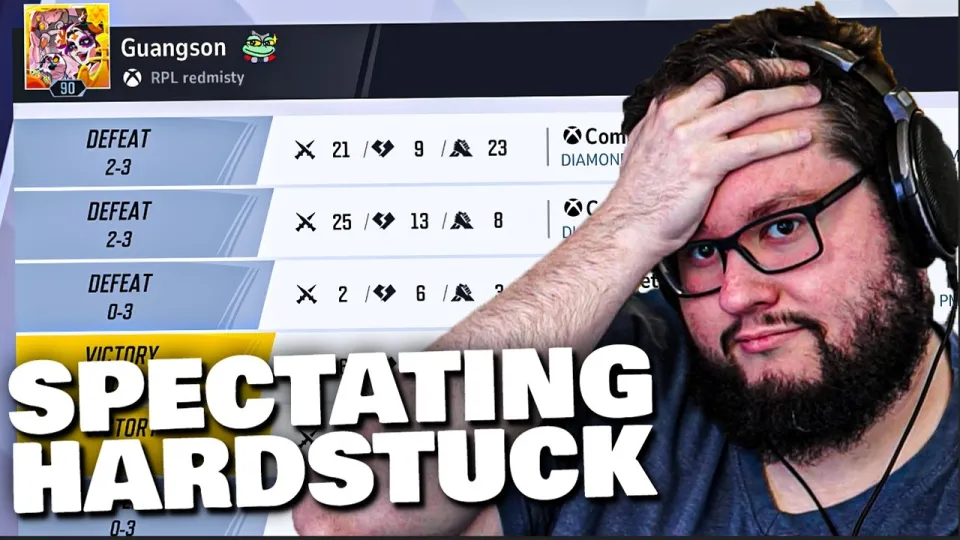
If you have ever wondered whether a Marvel Rivals player can reach Grandmaster with a negative win rate and still blame the team, the answer is yes. In a spectate breakdown, Flats followed a player who described himself as hardstuck in Marvel Rivals and watched him make the same avoidable mistakes over and over while insisting his teammates were the problem. The session is less a guide to ranking up than a catalogue of habits that keep players stuck, and you can watch Flats live and judge similar cases yourself on his Twitch channel.
The short version: the rank was real, the ego was bigger, and the gameplay did not match either. A Marvel Rivals Grandmaster badge in 2026 is not proof of mastery, because the ranked ladder rewards volume as much as quality.
What a hardstuck Marvel Rivals player actually looks like in Grandmaster
A hardstuck player is someone whose rank has stopped moving because their habits have stopped changing, and the spectated session showed exactly that pattern. The player opened by explaining that his teammates were the reason he could not climb, then proceeded to make decisions that no amount of teammate quality could rescue.
The most visible issue was hero usage. He queued as Cloak and Dagger, one of the most flexible supports in Marvel Rivals, and then played roughly half the character. He stayed on Dagger for healing and damage output, and treated Cloak's invisibility, blind and escape tools as optional extras. Viewers immediately latched onto it: the joke was that he was playing Dagger and simply holding the Cloak.
That matters because Cloak and Dagger is designed as a stance-swap support. Dagger provides healing walls, a healing projectile and area denial. Cloak provides the Terror Cape blind, the Dark Teleportation team escape and the invisibility window that lets the pair survive dives. A player who never swaps is effectively running a support with a third of its kit missing, which is fatal in Grandmaster lobbies where dive compositions punish static backlines.
The small mistakes that add up to a stuck rank
The most damning moments in the breakdown were not dramatic failures but tiny, repeated ones, and each of them costs a fight in a mode as snowbally as Marvel Rivals. Flats repeatedly pointed out positioning that left the support exposed, cooldowns burned for no reason and ultimate usage that ignored what the enemy team was holding.
A few examples stand out:
- Walking past a health pack while apparently looking for a health pack, a moment that became the funniest clip of the session.
- A Magneto ultimate that missed and ended with the character collapsing in visible defeat, which viewers read as the whole match in miniature.
- Invisibility cooldowns spent without any follow-up, so the escape tool was gone when a dive actually arrived.
- Damage-oriented Rocket Raccoon logic applied to a support slot, where healing output was sacrificed for chip damage that never converted into a kill.
None of these are mechanical failures. They are awareness failures, and awareness is exactly what separates a Grandmaster who climbs from a Grandmaster who plateaus.
Why negative win rates still climb in Marvel Rivals
Marvel Rivals allows players to gain rank from a negative win rate because the ranked system has historically been more forgiving than comparable hero shooters, and that design choice has consequences. When a player can climb while losing more games than they win, the rank badge stops signalling skill and starts signalling time invested.
This is the root of the hardstuck paradox. A player with a losing record reaches Grandmaster, looks at the badge, concludes that they belong there, and then blames teammates when the wins stop coming. The ladder gave them a rank they did not earn through performance, and the mismatch between self-image and actual level produces exactly the kind of ego-driven gameplay Flats spent the session dissecting.
For players who want a genuine read on their level, the useful number is not the rank icon but the win rate, the average deaths per ten minutes and the share of team fights where their ultimate actually landed. A Grandmaster with a sub-50 percent win rate and high deaths is a Diamond player with a nicer border.
The Spider-Man main problem and accountability in hero shooters
Duelist mains who switch to support often carry habits that do not transfer, and the player's background as a Spider-Man main explained a lot of what went wrong. Spider-Man rewards aggressive flanking, fast target selection and a willingness to trade your own life for a pick. Support rewards patience, line-of-sight discipline and cooldown conservation.
When a former flank main picks up Cloak and Dagger, the instinct to push forward and chase kills does not disappear. It shows up as a support standing in front of the tank, burning Dark Teleportation to reposition aggressively, and then dying to a dive that the ability was supposed to counter. The player never took responsibility for those deaths, which is the single most reliable predictor of a permanently stuck account.
Accountability is not a personality trait, it is a review habit. Recording a match, watching it back and asking why a death happened produces more rank progress than any tier list.
Typical viewer questions about the hardstuck Marvel Rivals case
The audience reaction to this breakdown split into three camps, and each one reflects a real question players have about the ranked ladder. Some viewers recognised the player as the teammate they always seem to get at 99 out of 100 points toward the next rank. Others wanted him on the enemy team in every match they ever play. A third group, mostly lower-ranked players, found it discouraging that this level of play could sit in Grandmaster at all.
There is also a persistent debate about off-meta picks. Damage-focused Rocket Raccoon players argue that the extra firepower wins fights, while support purists argue that a Rocket who does not heal is a wasted slot. The spectated session did not settle that argument, but it did show that a player who refuses to use the full kit of a flexible hero is not making a strategic choice, they are just leaving value on the table.
The most common question of all was simpler: how does someone like this reach Grandmaster? The answer is volume, a forgiving point system and the fact that Marvel Rivals rewards persistence as much as precision.
Where to find more Marvel Rivals breakdowns and coaching content
Flats publishes spectate reviews, ranked climbs and hero breakdowns across several channels, and the links below are the ones referenced with this video. The Twitch channel is where the live spectating happens, including viewer-submitted replays and on-stream reviews.
- Twitch, live streams and spectate sessions: https://www.twitch.tv/flats
- Discord community: https://discord.gg/flats
- Twitter, clips and schedule updates: https://twitter.com/Flats_Ow
- TikTok, short highlights: https://www.tiktok.com/@flats_ow
- Facebook page: https://www.facebook.com/FlatsTTV
What the hardstuck Marvel Rivals case teaches about climbing in 2026
A Grandmaster badge in Marvel Rivals does not guarantee Grandmaster decisions, and this spectate session is the clearest illustration of that gap. The player had the rank, the ego and the confidence, but not the hero mastery, the positioning or the accountability to back any of it up. Flats, the author of this breakdown, turned a single viewer submission into a lesson about cooldown usage, stance swapping on Cloak and Dagger, and the danger of blaming teammates before reviewing your own replay. If you want to see the next case live, follow Flats on Twitch and submit your own match for review.
Key takeaways
- Flats spectated a Marvel Rivals player who insisted his teammates were holding him back in Grandmaster.
- The player's main was Cloak and Dagger, but he spent most of the match parked on Dagger and barely used Cloak's kit.
- He walked past a health pack while looking for a health pack, and his Magneto missed a critical ultimate.
- Viewers pointed out that a negative win rate can still climb in Marvel Rivals, which inflates confidence without improving skill.
- The player's history as a Spider-Man main became the running joke of the breakdown.
Questions & answers
Can you reach Grandmaster in Marvel Rivals with a negative win rate?
Yes. Marvel Rivals has a forgiving ranked point system, so a player can climb over a large number of games even while losing more than they win. That is why a Grandmaster badge alone does not prove skill, and why win rate plus deaths per ten minutes is a better measure of actual level.
Why is Cloak and Dagger considered a strong support pick?
Cloak and Dagger is one of the most flexible supports in the game because the stance swap covers two roles. Dagger brings healing walls and area denial, while Cloak brings the Terror Cape blind, team-wide Dark Teleportation and an invisibility window for surviving dives. A player who stays on Dagger the whole match is using roughly half the hero.
What is the most common reason players get hardstuck in hero shooters?
Awareness and accountability, not aim. Missing cooldown timing, walking past healing, wasting escape tools and refusing to review losses keep players stuck far more reliably than mechanical skill does. The player in this breakdown had the rank but not the review habit.
Does maining a duelist like Spider-Man hurt you when you switch to support?
It can, because the instincts do not transfer. Duelist play rewards aggressive flanking and trading your life for a pick, while support play rewards patience, line-of-sight discipline and saving cooldowns for the dive. Former flank mains often position too far forward on support and then blame the team for the resulting deaths.
Source: I Spectated Someone Who Claimed To Be Hardstuck In Marvel Rivals · Markdown version